

Your Attendance Isn't Your Report Card
6pm vinyasa, last July. The booking list shows just two names in a room built for twenty.
The first thought is rarely "ah, summer." It's: did I do something wrong?
Here's something worth remembering before that thought gets any louder: the size of your class has nothing to do with the size of your teaching.
Why summer always looks like this
Every studio sees it. Every teacher feels it. Rooms that were full in May sit half-empty in July, and it's got nothing to do with you. People are on holiday, the sun's out until 10pm, routines fall apart, that one student who never misses class is somewhere in Portugal right now. The rhythm changes for everyone, teachers included.
Knowing that doesn't stop the gut-punch when you look out at just a few mats instead of a full room, though. So instead of trying to talk yourself out of the feeling, try this: after class, write down one thing you did well, a cue that landed, an adjustment someone needed exactly then. Nothing about the room, just you. Keep that up for a few weeks and your sense of "that was a good class" stops depending on the booking list.

The almost-empty room
Just a handful of people. Maybe only one. Suddenly your group class feels more like a private session, and it feels... weird. Do you teach with the same energy? Does it feel awkward for them, too?
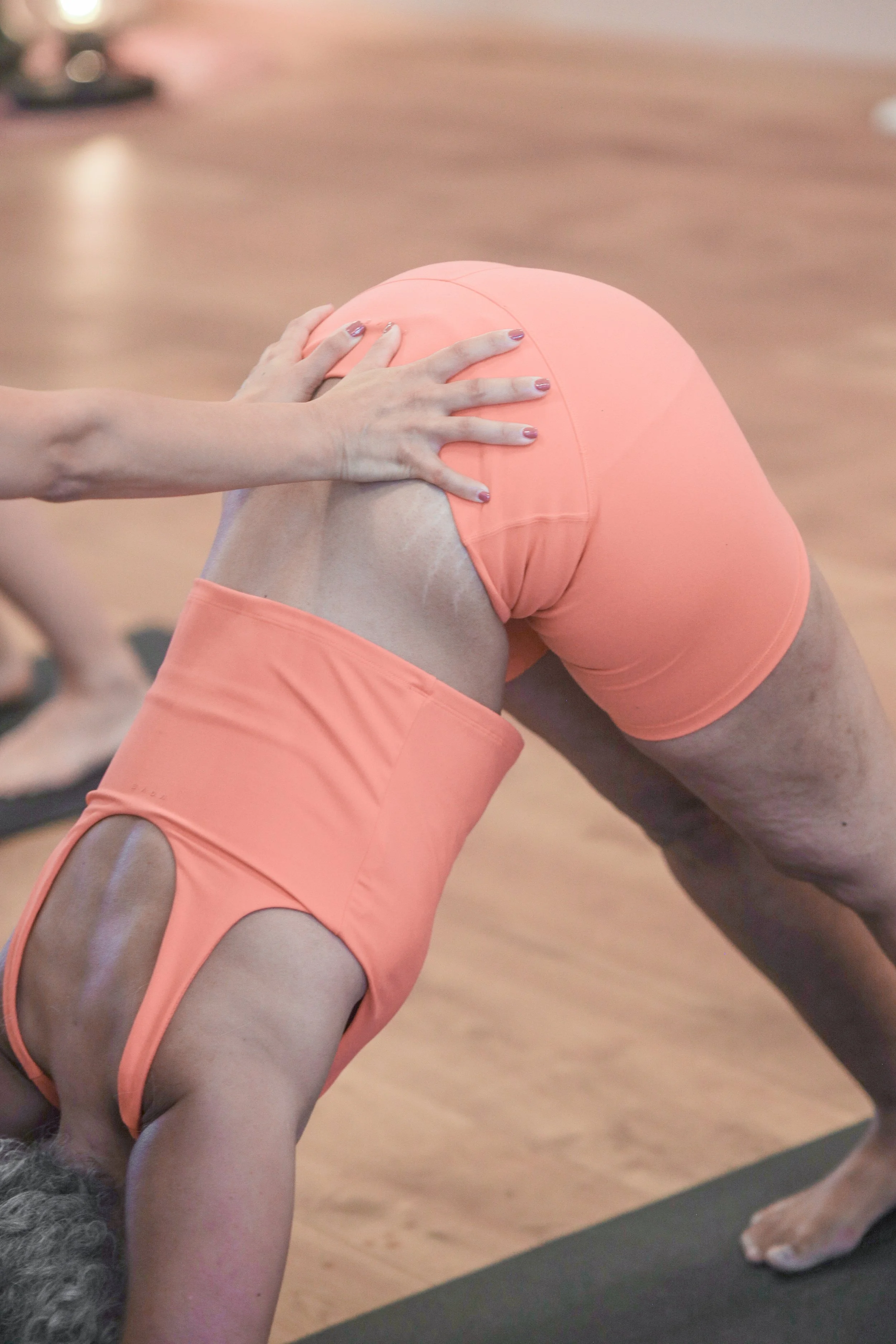
One teacher we talked to flips this completely: she tells her solo student, "lucky you, you just got a private lesson for the price of a drop-in." And she means it. With a smaller group, you can actually see what's happening in someone's shoulders. You can adjust in real time. You can ask a question and actually wait for the answer, instead of moving on because everyone else is waiting too.
That's the move, really: stop treating a small class as a shrunk-down version of your Tuesday evening slot and start using names, getting hands-on, asking things you'd never have time to ask in a full room. Plenty of teachers will tell you, if they're honest, that some of their favourite classes ever were the smallest ones.
Where the tired feeling actually comes from
Teaching a full room gives you something back, even if you don't clock it while it's happening. A room full of people breathing and moving with you has a pull to it. You feed off it without noticing.
In summer that pull is gone. The regulars are away, the faces keep changing, and the room just sits there instead of meeting you halfway. So you end up working harder for the same result, and by the end of class you're wiped, despite teaching a much smaller group. Worth knowing, so you don't read your own tiredness as a sign something's wrong: make sure your own practice doesn't disappear over summer. Even a short practice can give you back some of what a full room normally does.
September doesn't prove anything
When your classes fill back up, that's not the moment you become a good teacher again. You already were one, no matter how many people walked through the door. You just didn't have anything to point at.
Maybe that's the actual use of a quiet summer: not to measure your teaching, but to notice it's still there even without the proof.