

When Pilates Starts Asking More of You
You've been practising for a while. Classes feel familiar, your body moves with more ease than it used to, and you leave the mat feeling good. But somewhere along the way, the sense of learning that used to follow you home has gone quiet.
It's not that the practice has stopped working. It's that what it's asking of you has changed.
It was never really about the exercises
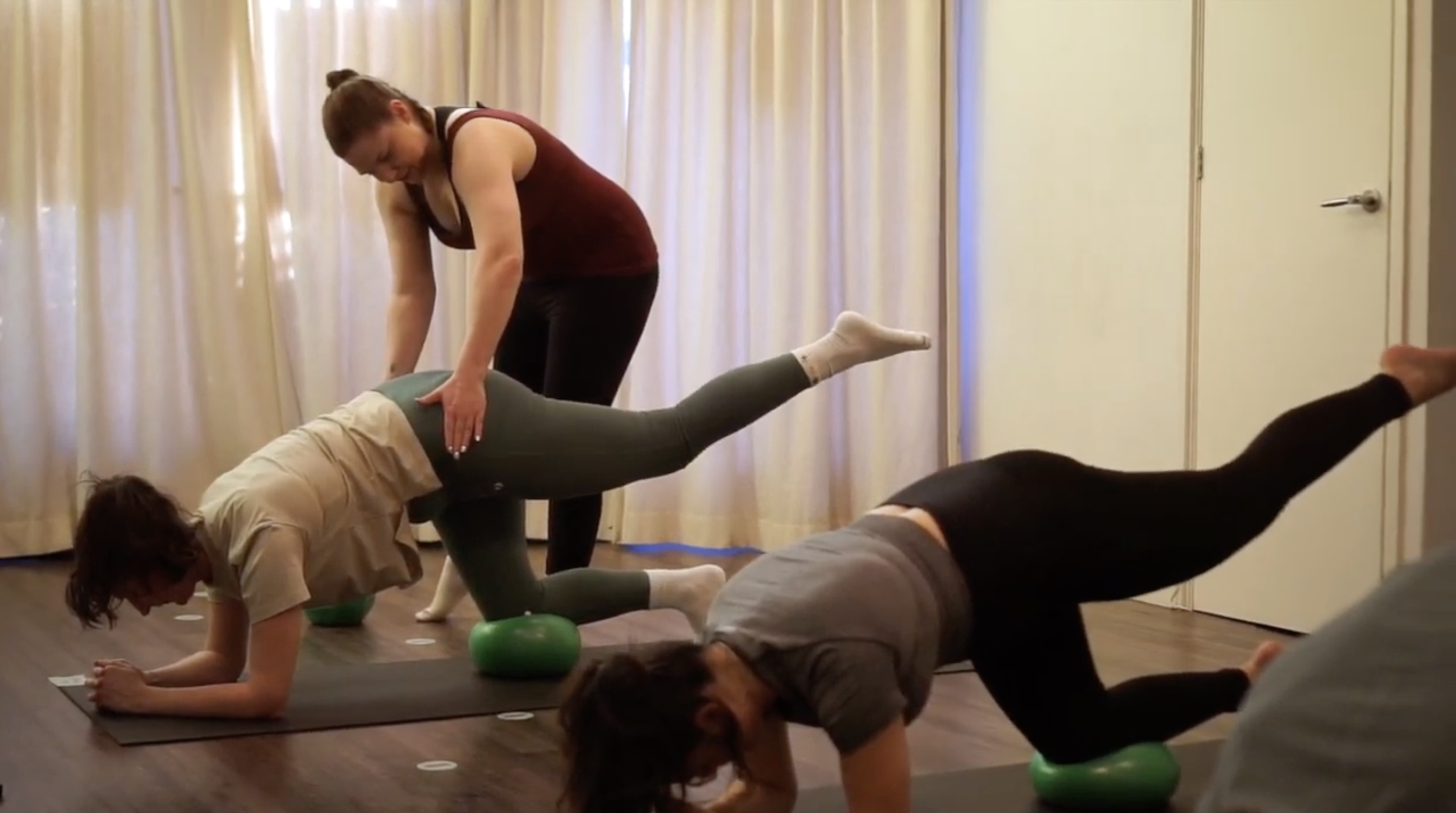
Joseph Pilates originally called his method Contrology, a name that points directly to what he was building: a practice in which the mind learns to guide the body with real attention.
"It is the mind itself which shapes the body," he wrote. What counted, for him, wasn't how many times you performed an exercise but whether you were fully present inside it.
In the early stages of learning, that presence gets absorbed by mechanics. Where does the leg go? Is the pelvis right? What is the breath doing? Completely natural. But once the mechanics settle into the body, the question changes. It stops being about what to do and starts being about how it actually feels from the inside.
Where the work lives
One of the first things you start to notice, with time, is effort. Not how much of it you're using, but where it's landing. Early on, effort tends to concentrate wherever the body defaults when it's working hard: the jaw, the neck, the hands. As familiarity grows, those patterns become easier to spot. And once you can spot them, you can begin to redirect.
This is where practice starts to feel less like executing shapes and more like listening. A movement that used to feel like pushing through resistance begins to feel more even, more continuous through the body. Not easier, but clearer.
Repetition makes that possible. Without the distraction of learning something new, your attention has somewhere to settle. The same exercises you've done dozens of times become informative in a way they couldn't be when you were still finding your footing.
What you notice between the exercises
The way you move between exercises tells you a lot about how coordination is actually organised in your body. If movement stops and restarts at each break, the exercises are still separate things. When coordination begins to carry through the transitions, something more integrated is developing.
Pilates originally presented his mat work as a continuous sequence. The transitions were part of the method. Paying attention to them can reveal patterns that stay hidden when your focus stays only on the exercises themselves.
When understanding is what you're after
At a certain point, you might notice a pull that's hard to name. Toward the structure underneath the practice. Why are things sequenced the way they are? What is actually being trained when you do the same movements over years, with full attention?
A useful thing to try: pick one exercise you know well and stay with it for a few weeks with a single question in mind. Not "am I doing this right?" but "what do I actually notice when I do this?" You'll find the same exercise says something different every time you bring that kind of attention to it. That's where understanding starts to build.
From there, it tends to want more structure. People who have no plans to teach still find that a teacher training changes their practice. When you study how to teach a movement, you understand it from the inside out. The method becomes visible in a way it isn't when you're simply performing it.
The Pilates Mat Teacher Training at Yoga Moves
Our Pilates Mat Teacher Training is designed for exactly this stage of the journey. Whether teaching is part of your intention or not, the programme offers a structured path into the method: its principles, its sequencing, the logic that connects everything you already know.
Some participants leave ready to teach. Others return to their own practice with a depth of understanding that makes familiar exercises feel genuinely new. What develops in both cases is a practice that finally makes sense at the level you can feel it, not just do it.
If you're at the point where practice feels steady but learning feels quieter, this might be what's next.
About the Pilates Mat Teacher Training
The training is led by Tanya Shiels and runs across 6 weekends, starting 19 September 2026. It covers the full mat repertoire with a strong focus on group teaching, anatomy, and adaptability for mixed-level classes. Alongside the 12 in-person training days, the programme includes self-practice hours, observation, and hands-on teaching experience.